
Lenny Vays
July 30, 2024

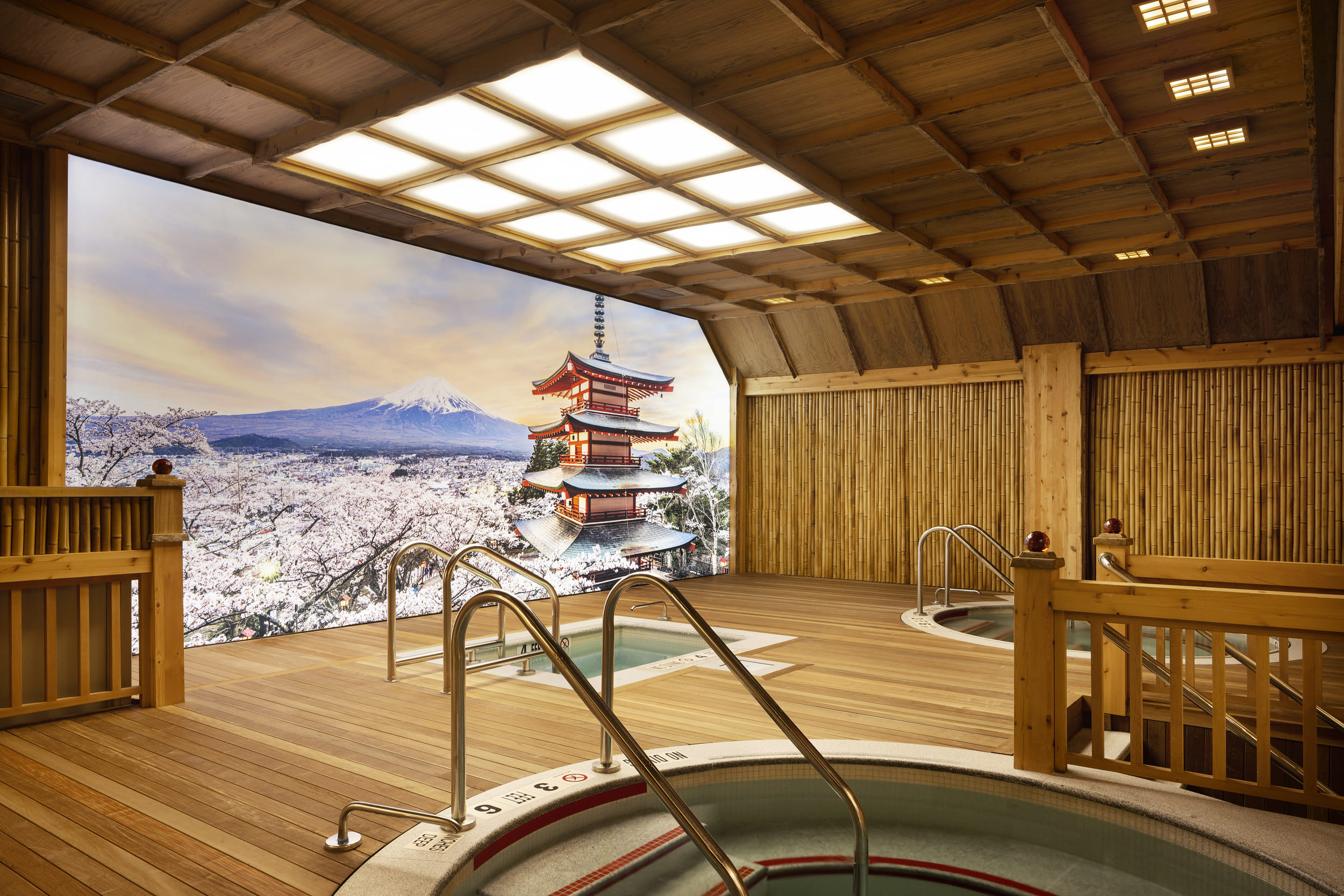
If you’re searching for an onsen NYC experience, you’ve probably come across photos of serene soaking pools inspired by Japan’s centuries-old bathing culture. While traditional Japanese onsens are naturally fed by geothermal hot springs, many modern wellness destinations recreate the restorative ritual through thoughtfully designed thermal pools and hydrotherapy circuits.
At World Spa in Brooklyn, guests can experience this tradition through three dedicated onsen pools featuring warm, hot, and cold pools designed to promote relaxation, circulation, and recovery as part of a complete thermal wellness journey.
An onsen is a Japanese hot spring bath, traditionally supplied by naturally mineral-rich geothermal water. For centuries, onsens have been central to Japanese wellness, offering a place to unwind, reconnect, and enjoy the therapeutic effects of warm water.
Today, many modern spas around the world recreate the onsen experience using carefully maintained thermal pools that emphasize the same core principles — immersion in warm water, mindful relaxation, alternating hot and cold temperatures, a calm, quiet environment, and whole-body recovery.
While not every onsen-style spa uses natural hot spring water, the experience is inspired by the same philosophy of restorative bathing.
Hydrotherapy is the therapeutic use of water at different temperatures to support physical and mental wellbeing. A hydrotherapy spa combines pools, cold plunges, saunas, steam rooms, and relaxation spaces into a carefully designed wellness circuit.
Japanese-inspired hydrotherapy emphasizes slowing down and allowing temperature changes to gently stimulate the body. Potential benefits include reduced muscle tension, improved circulation, stress relief, temporary reduction in soreness after exercise, deep relaxation, and mental clarity.
While hydrotherapy is not a medical treatment, many guests incorporate it into their wellness routines for recovery and relaxation.
World Spa’s Japanese-inspired onsen area features three pools, each serving a different purpose within the thermal journey.
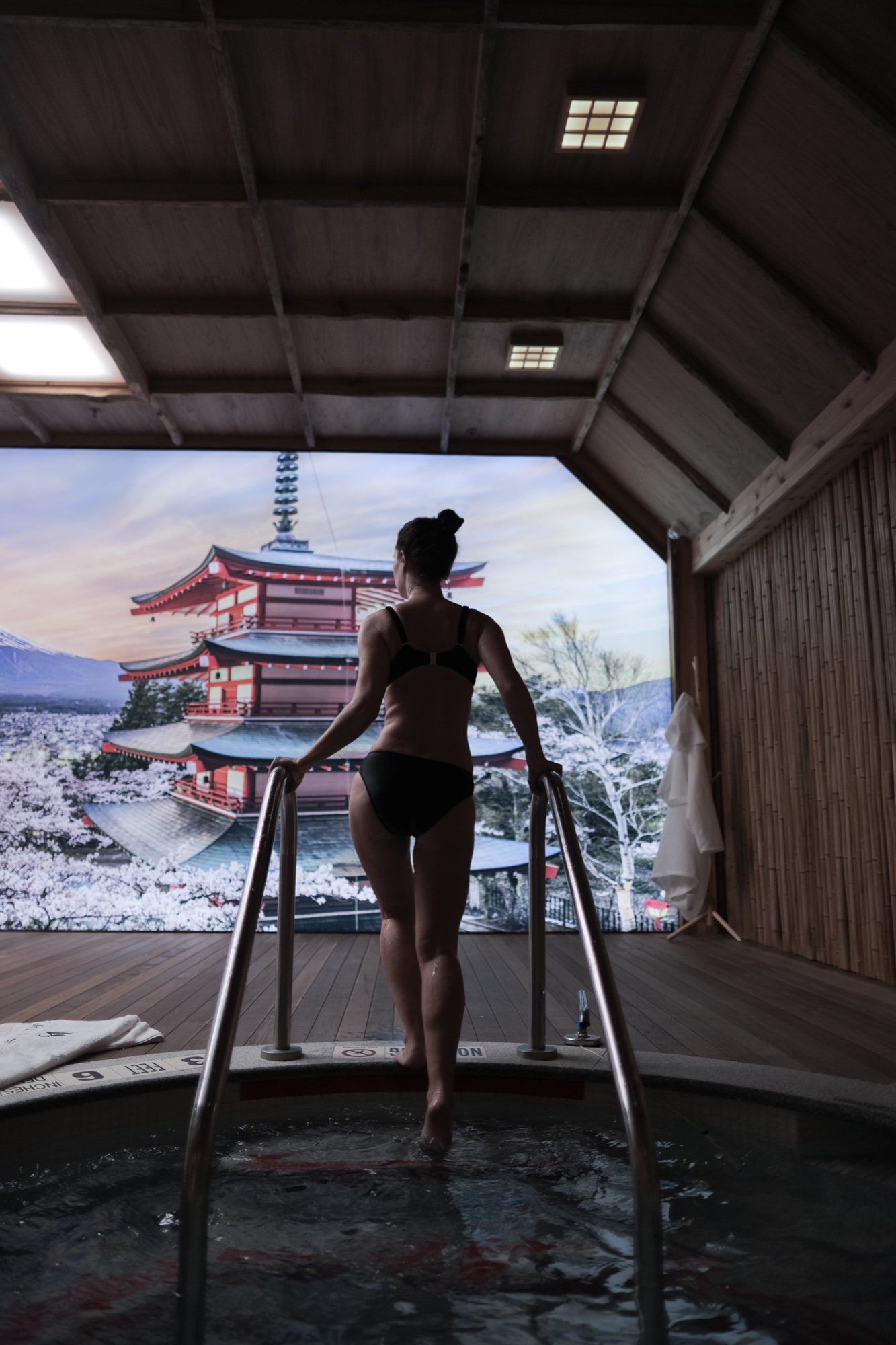
Hot Onsen Pool. The hottest pool encourages deep relaxation by helping muscles release tension and promoting a feeling of calm. Guests often begin or finish their thermal circuit here for an extended soak.
Warm Onsen Pool. The warm pool provides a gentler experience that’s ideal for longer immersion. It’s perfect for slowing down between heat experiences or simply enjoying quiet time in the water.
Cold Onsen Pool. The cold pool delivers a refreshing contrast after time spent in the hot or warm pools. Cold-water immersion may help reduce feelings of muscle fatigue while providing an invigorating finish to each heat cycle.
One of the most popular wellness practices is heat hydrotherapy, which alternates warm environments with cold immersion. A simple thermal circuit might look like this:
Warm up. Relax in a sauna or steam room for 10–15 minutes.
Cool down. Spend 30–90 seconds in the cold plunge or cold onsen pool.
Recover. Settle into the warm onsen pool.
Rest. Take a moment to relax and hydrate.
Repeat. Two or three rounds, based on your comfort level.
Alternating temperatures encourages circulation and creates the invigorating feeling many spa guests love after a complete thermal cycle.
At World Spa, the onsen pools work alongside other thermal experiences to create a complete hydrotherapy journey. Many guests enjoy a sequence like sauna, cold plunge, warm onsen, steam room, hot onsen, and finally the relaxation lounge.
Because the pools vary in temperature, they can be used throughout your visit rather than as a single stop.
For more guidance on contrast therapy, read our article about using the cold plunge as part of a complete thermal circuit.
Although both involve soaking in warm water, they’re designed for different experiences.
Onsen. Inspired by Japanese bathing traditions and part of a wellness ritual — multiple temperatures, used within thermal circuits, in a quiet, restorative atmosphere.
Hot tub. Primarily recreational and usually a standalone amenity — typically one hot temperature, less commonly paired with cold immersion, and often social.
The focus of an onsen is mindful relaxation rather than entertainment.
A visit to a hydrotherapy spa may be especially appealing if you want to relax after a busy week, recover after exercise, enjoy sauna and steam experiences, are looking for a peaceful wellness ritual, or want to explore Japanese-inspired bathing traditions.
If you have certain cardiovascular conditions, are pregnant, or have other medical concerns, consult your healthcare provider before using hot or cold thermal experiences.
If you’ve been searching for onsen NYC, hydrotherapy spas, or even hydrotherapy near me, World Spa offers a modern interpretation of Japan’s bathing traditions in Brooklyn.
With warm, hot, and cold onsen pools integrated into a full thermal circuit, guests can enjoy the restorative benefits of temperature-based wellness in a peaceful, thoughtfully designed environment.
Whether you’re visiting for recovery, relaxation, or simply to experience something new, the Japanese-inspired onsen pools provide one of the most distinctive wellness experiences at World Spa. Onsen access is included with any World Spa day pass — plan your visit here.
What is an onsen? An onsen is a traditional Japanese hot spring bath, typically fed by naturally heated, mineral-rich geothermal water. For centuries, onsens have been an important part of Japanese culture, offering a place to relax, socialize, and support overall wellbeing. Today, many modern wellness spas recreate the onsen experience with carefully designed thermal pools inspired by these traditions, even when they are not supplied by natural hot springs.
Are World Spa’s onsen pools natural hot springs? No. World Spa’s onsen pools are Japanese-inspired thermal pools, not naturally occurring geothermal hot springs. They are designed to capture the calming atmosphere and restorative bathing ritual of a traditional onsen while offering warm, hot, and cold water experiences as part of a complete hydrotherapy circuit.
What are the benefits of hydrotherapy? Hydrotherapy uses water at different temperatures to promote relaxation and support recovery. Many guests use hydrotherapy to ease muscle tension, encourage healthy circulation, reduce stress, support post-workout recovery, improve relaxation and sleep quality, and feel refreshed and re-energized. While many people find hydrotherapy beneficial, it is intended to support general wellness and is not a substitute for medical treatment.
How do you use hot and cold pools correctly? A simple hydrotherapy routine is to alternate between heat and cold while listening to your body’s comfort level: spend 10–15 minutes in a sauna, steam room, or hot pool; cool off with 30–90 seconds in a cold plunge or cold onsen pool; relax in a warm pool for several minutes; then rest, hydrate, and repeat the cycle two or three times if desired. If you’re new to contrast therapy, start with shorter sessions and gradually increase your exposure as you become more comfortable.
How long should you stay in an onsen pool? There’s no single ideal duration, but many guests enjoy soaking in a warm or hot onsen pool for 10 to 20 minutes at a time. If you’re alternating between hot and cold pools, shorter sessions are often more comfortable. Stay hydrated throughout your visit, and leave the pool if you begin to feel lightheaded, overheated, or uncomfortable. The goal is to leave feeling relaxed and refreshed—not exhausted.