Lenny Vays
July 30, 2024

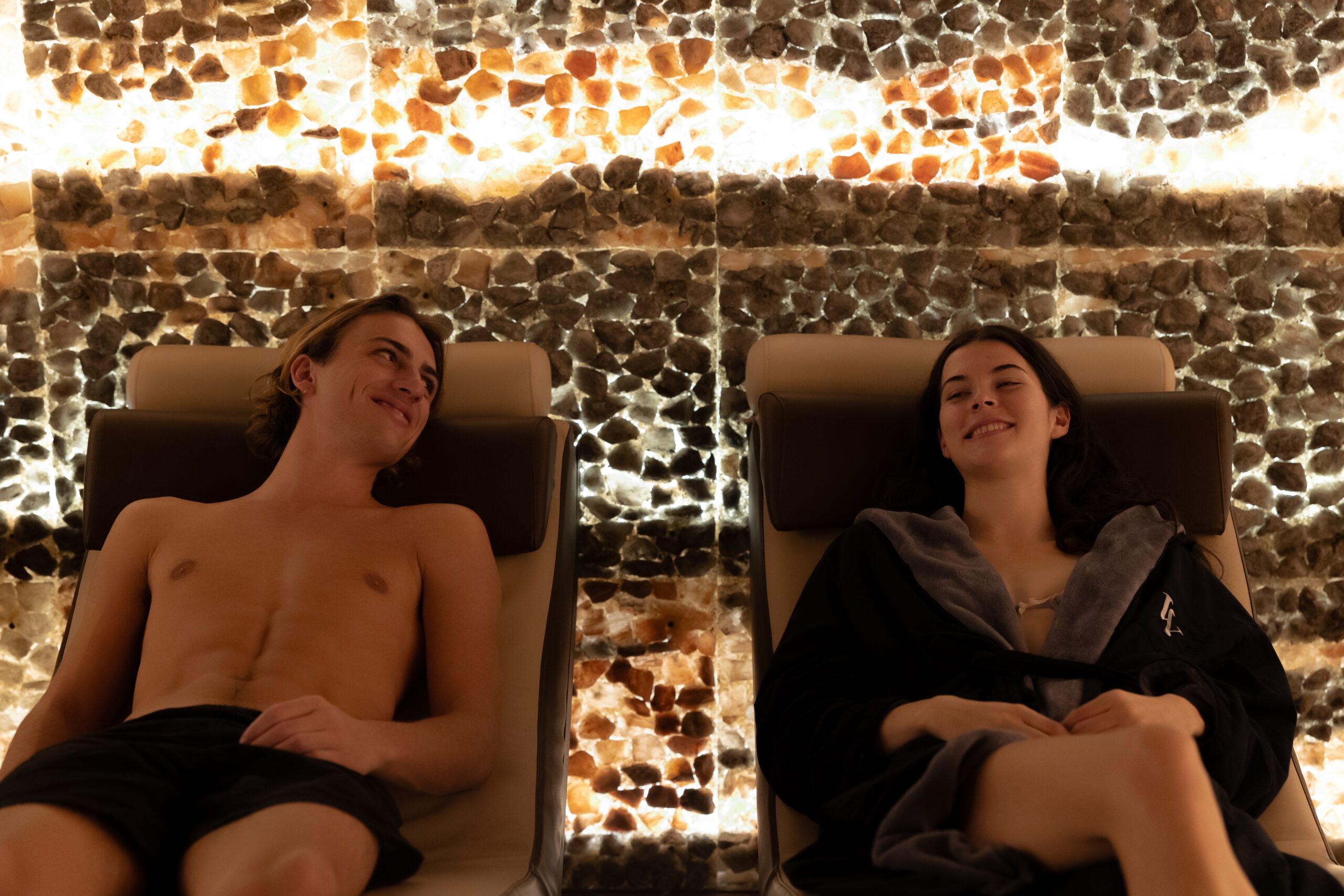
There’s one room at World Spa where nothing happens — and that’s the point. No heat to endure, no cold to brace for. You sit in still, faintly salted air, breathe slowly, and let fifteen quiet minutes do their work.
This is halotherapy, and the Himalayan Salt Room is the calmest stop on the whole circuit.
Halotherapy is the practice of breathing air carrying microscopic dry-salt particles. The idea is old: medieval healers prescribed salt-air inhalation, and it gained a following when doctors noticed how rarely workers in Polish salt mines seemed to suffer respiratory trouble. That observation grew into the salt caves and salt rooms you find today. At World Spa, the room is lined with backlit Himalayan salt, and fine dry-salt particles drift through cool, mineral air. You don’t do anything with it. You sit, you breathe, you rest.
This is what most people come for. Salt air is traditionally associated with clearer, easier breathing — the sensation of your airways feeling more open. Many guests step out saying they simply breathe a little easier and feel less congested.
The reason halotherapy has survived for centuries is the feeling of it — slow, deliberate breathing in clean, mineral air.
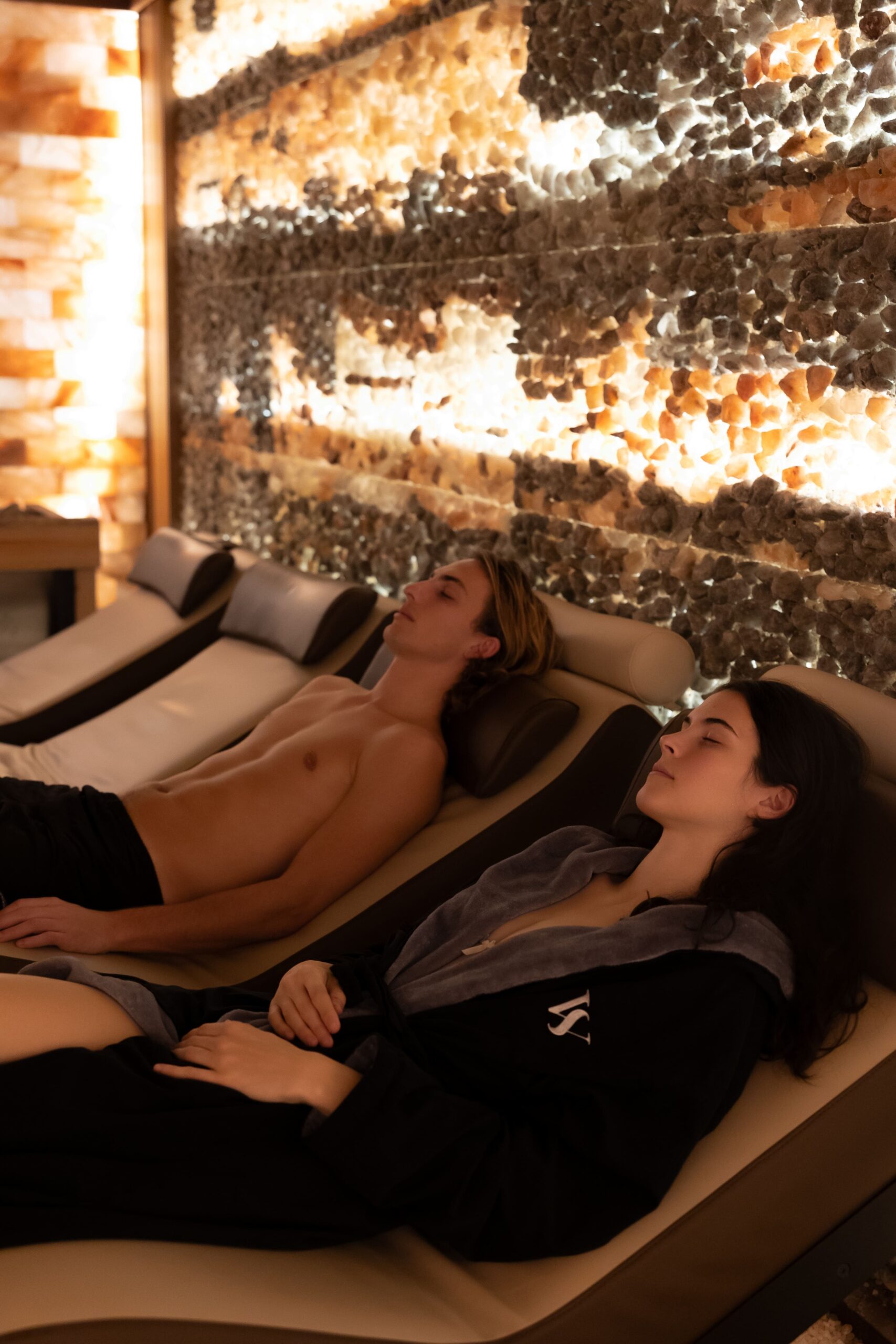
Salt has long been valued for the skin, and many guests find time in the salt room leaves their skin feeling calmer and fresher. Think of it as a gentle, low-effort complement to the rest of your spa day — not a treatment, but a pause your skin tends to enjoy.
This may be the most reliable benefit of all. The salt room is the lowest-stimulation space in the building: dim, still, quiet, no heat pressing on you. Fifteen minutes of slow breathing there is a nervous-system reset. Many guests use it exactly this way — a deliberate quiet moment, and often a better night’s sleep afterward.
Honesty matters more than hype here. The research on halotherapy is still limited and mixed — it’s best understood as a relaxing wellness practice, not a medical treatment. It isn’t a cure for asthma, allergies or any respiratory condition, and it’s not a substitute for medical care. If you’re managing a health condition, talk to your doctor before trying salt therapy. What we can promise is the experience: still air, quiet, and a genuinely restful pause.
What it is — dry salt therapy (halotherapy) in a Himalayan-salt-lined room
Best for — slow breathing, calmer skin, deep quiet
How long — about 15 minutes
Access — included with any World Spa day pass
Where — 1571 McDonald Ave, Brooklyn, NY 11230
Rinse off before entering, find a quiet spot, and breathe slowly and deeply for around fifteen minutes. Rehydrate afterward. Love the mineral theme? Our Himalayan Warm Stone Massage uses warm Himalayan salt stones on the body.
What is a salt room good for? It’s traditionally associated with clearer breathing and calmer skin, and it’s a reliably relaxing, low-stimulation pause. It is not a medical treatment.
How long should I stay in the salt room? About 15 minutes. Sit back, breathe slowly, and relax.
Is halotherapy safe? For most people it’s a gentle, passive experience. If you have a respiratory or other health condition, check with your doctor first.
Is the salt room included with admission? Yes — included with any World Spa day pass.